
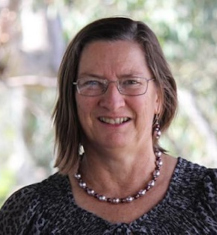
Honorary Associate Professor, Crawford School of Public Policy, Australian National University
At the Conference:
Day 2 Plenary 6
Breastfeeding As Ecological Justice: Connecting Health, Food
Security & The Environment
Occupation:
Bio:
Dr Smith is an Honorary Associate Professor at the Crawford School of Public Policy, Australian National University and Associate Professor at the Health Research Institute, University of Canberra.
Her recent ARC Future Fellowship investigated economic and environmental aspects of breastfeeding and markets in mothers’ milk. She led development of the Mothers’ Milk Tool and the Green Feeding Tool with Alive & Thrive Southeast Asia Pacific.
She has advised the US Surgeon-General Office and World Health Organization (WHO) on the economics of breastfeeding, and led evidence reviews for WHO and the Australian Department of Health.
Dr Smith has also worked with international civil society organisations such as IBFAN and WABA.
She has published over 65 peer-reviewed articles, including in The Lancet and the Bulletin of the World Health Organization, and is an Associate Editor for International Breastfeeding Journal.
Dr Smith was previously a senior economist in Australian and New Zealand government departments of Treasury, Finance, and Environment, working on development assistance and international finance, national accounting, taxation, and water markets.
Breastfeeding cannot thrive without strong systems and rights-based protections. On the final day, the conference will focus on building inclusive health systems, workplaces, and legal frameworks that enable mothers to breastfeed without barriers. Participants will examine maternity protection, workplace support, and ethical partnerships—culminating in a roadmap for regional reforms. The day will close with a unifying call to action: advancing equity, dignity, and systemic support for breastfeeding families across Southeast Asia.
Climate change and recurring disasters place breastfeeding mothers and infants on the frontlines of vulnerability. This day highlights breastfeeding as both a survival strategy and a sustainable, climate-friendly practice. Sessions will address IYCF in emergencies, integration into disaster preparedness, and regional innovations in resilience. By linking ecological justice with infant feeding, the discussions will frame breastfeeding as an essential pillar in Southeast Asia’s climate adaptation and sustainability agendas.
Julie Smith (Australia)
Breastfeeding cannot thrive without strong systems and rights-based protections. On the final day, the conference will focus on building inclusive health systems, workplaces, and legal frameworks that enable mothers to breastfeed without barriers. Participants will examine maternity protection, workplace support, and ethical partnerships—culminating in a roadmap for regional reforms. The day will close with a unifying call to action: advancing equity, dignity, and systemic support for breastfeeding families across Southeast Asia.
Climate change and recurring disasters place breastfeeding mothers and infants on the frontlines of vulnerability. This day highlights breastfeeding as both a survival strategy and a sustainable, climate-friendly practice. Sessions will address IYCF in emergencies, integration into disaster preparedness, and regional innovations in resilience. By linking ecological justice with infant feeding, the discussions will frame breastfeeding as an essential pillar in Southeast Asia’s climate adaptation and sustainability agendas.